Popular (or Not) Finance & Technology
Posts: finance💸 and tech💻 explained (mostly).
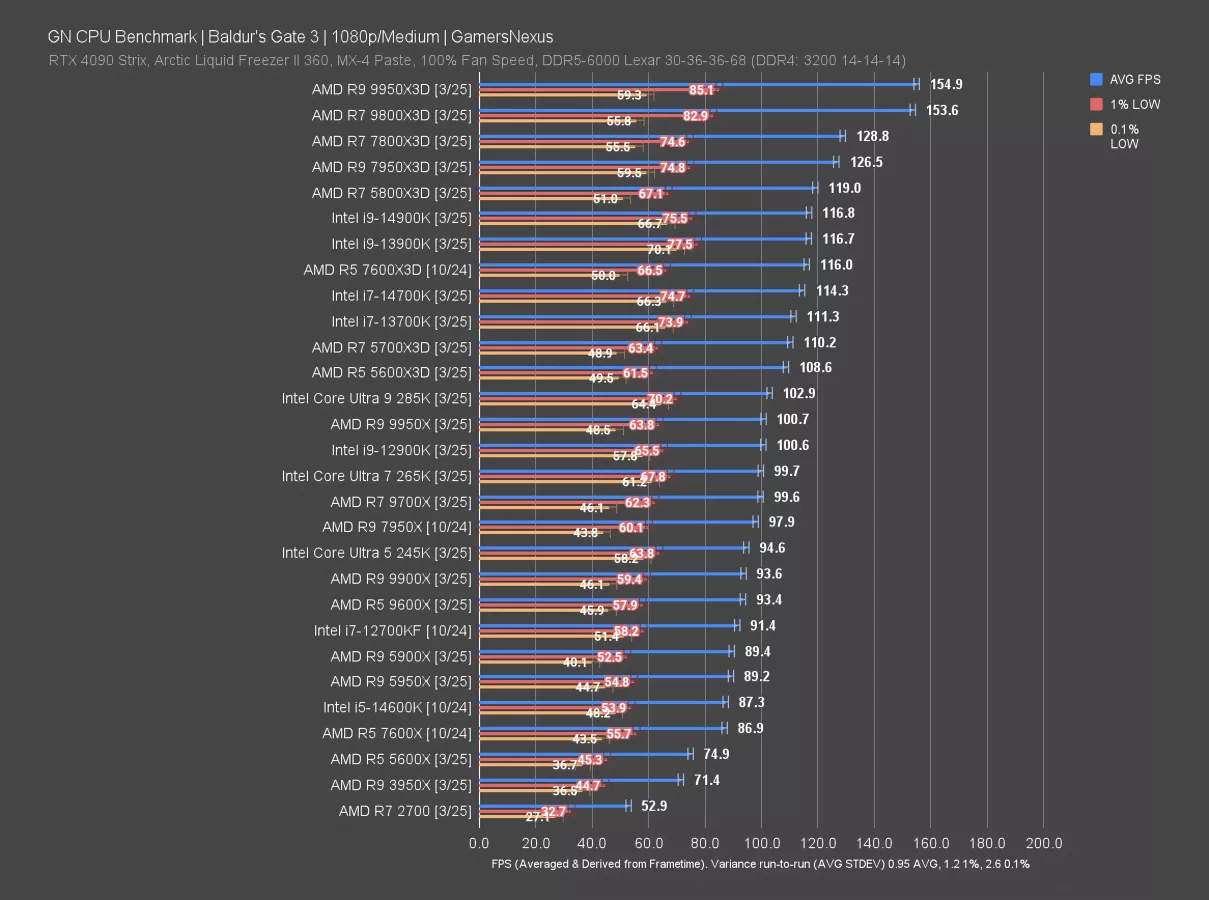
Introduction: The King of Gaming, 3D V-Cache AMD’s 3D V-Cache technology has been hailed as the “king of gaming performance” since its initial release. This technology, which vertically stacks L3 cache on top of the CPU die, expanding it from 384MB to up to 1,152MB, is precisely optimized for the random data access patterns prevalent in gaming. The Ryzen 9 9950X3D achieves a 54% FPS improvement in Baldur’s Gate 3 and a 37% improvement in Starfield compared to the standard 9950X. It also offers a 15% gaming performance boost over its predecessor, the 7950X3D. This is not merely a “slightly faster” improvement but a generational leap. ...

Displaying application icons in the Windows system tray significantly enhances the usability of background applications. However, when implementing Windows tray icons in Go, there’s a limitation: unlike macOS, only the ICO format is supported. This article explains this difference and introduces practical solutions for converting PNG images to ICO. Icon Format Differences Between Windows and macOS When using libraries that handle tray icons in Go (e.g., github.com/getlantern/systray), there are crucial differences: ...

Many Go developers have previously doubted the performance benefits of sync.Pool. Skeptical questions like “Is it really that fast?” or “Do I need it for small projects?” have been common. However, benchmarks in real-world scenarios clearly demonstrate that sync.Pool is by no means an overrated tool. Benchmark Setup: Realistic Workloads This analysis was performed under the following conditions: Allocation Method: Slice-based buffers (most common in Go) Batch Size: 1,000 objects allocated and returned per iteration Allocation Size: 32 bytes to 131,072 bytes (7 stages) Concurrency: GOMAXPROCS=1 (single-threaded) vs GOMAXPROCS=8 (8 P parallel processing) Crucially, buffers were stored in reusable slices to reflect the cache efficiency of pools in actual applications. ...

Recent Surge: Q3 Earnings Surprise Unity Software’s stock surged 18% after its third-quarter earnings, announced on November 5, 2025, significantly beat Wall Street expectations. The stock soared from $35.87 to $42.50 in pre-market trading, approaching its 52-week high of $46.94. Key Performance Indicators Revenue: $471 million (up 5% YoY, beating estimates of $452.76 million by 4.0%) Adjusted EPS: $0.20 (Turnaround to profit) Adjusted EBITDA: $109 million, with a 23% margin (11.6% above the expected $98.15 million) Free Cash Flow: $151 million (a $36 million increase YoY, representing 31% growth) This performance marks a turning point, showing a full recovery from the sluggish performance in Q1. The shift from negative to positive cash flow has fundamentally improved the company’s risk profile. ...

Introduction “This time is different” is one of the most dangerous phrases in financial markets. It surfaces every time tech stocks surge, just as it did during the dot-com era of the late 1990s and the current AI boom. However, not all rallies are created equal. A Boom and a Bubble may look similar on the surface, but their underlying structures are fundamentally different. This article clarifies the distinction between these two concepts using the dot-com era as a case study and evaluates the current state of the tech stock market. ...

The wallstreetbets subreddit has recently been abuzz. News broke that the Hindenburg Omen has been triggered. This indicator is known for “predicting” the 1987 Black Monday and the 2008 financial crisis, leading investors to view it as an ominous sign of market collapse. But can this indicator truly be trusted? In this article, we will uncover the truth behind the Hindenburg Omen. What is the Hindenburg Omen? ...

Conclusion: Disruptive Changes Created by UALink and OpenAI, and Cisco’s Leap Forward OpenAI’s expanded strategic investments and the growing market influence of the UALink consortium provide long-term growth momentum for Cisco’s data center business. OpenAI’s transition to a ‘Public Benefit Corporation (PBC)’ and the announcement of a large-scale infrastructure investment of approximately $1.4 trillion are leading to an explosive increase in AI workloads. As UALink, an 'open connectivity standard,' becomes mainstream in the evolution of AI infrastructure, network infrastructure flexibility and scalability are emerging as top priorities. With essential connectivity, security, and optimized network architecture becoming indispensable, Cisco is expected to benefit from both competition and partnerships. Background: OpenAI, UALink, and Changes in the Market Environment 1. OpenAI’s PBC Transition and $1.4 Trillion Infrastructure Investment Plan In October 2025, OpenAI transitioned from its non-profit parent to a ‘Public Benefit Corporation (PBC)’ that combines public benefit and profit, actively pursuing new investments and data center expansion. CEO Sam Altman unveiled a large-scale infrastructure investment plan of approximately $1.4 trillion, which corresponds to about 30 gigawatts (GW) of data center capacity. This scale, capable of supplying about 7.5 million U.S. households, signifies an evolution beyond a mere software company to an 'AI infrastructure utility.' ...

TL;DR I’m not sure if quantum computers will ever be useful in real life. But IBM has promised to deploy large-scale quantum computers by 2029. ULVAC is the sole Japanese supplier of essential components (coolers) for quantum computers. Currently overvalued with a P/E of 20.26x and PEG of 4.05x. However, entering after confirming 2026 earnings could yield a 100-200% return over 3-5 years. Let’s Be Honest: I Don’t Believe in Quantum Computers I don’t get what’s so great about quantum computers. For 30 years, the technology has been “10 years away from commercialization” and is still stuck in the lab. Google’s Willow chip is 13,000 times faster than a supercomputer? Great. But what do you do with it? ...

Introduction As of October 28, 2025, Samsung Heavy Industries has recorded a +116% year-to-date increase, outperforming even Samsung Electronics (+85%) within the Samsung Group. In the last month of October alone, it rose by +40%, and 17 securities firms have unanimously raised their target prices. However, the truly interesting part is that this stock price surge is not based on a simple demand cycle but on structural changes. We will examine how the technological development of localizing cargo containment systems (KC-2C) will fundamentally improve Samsung Heavy Industries’ profitability, and how much further the stock price has the potential to rise with the expansion of the FLNG market. ...
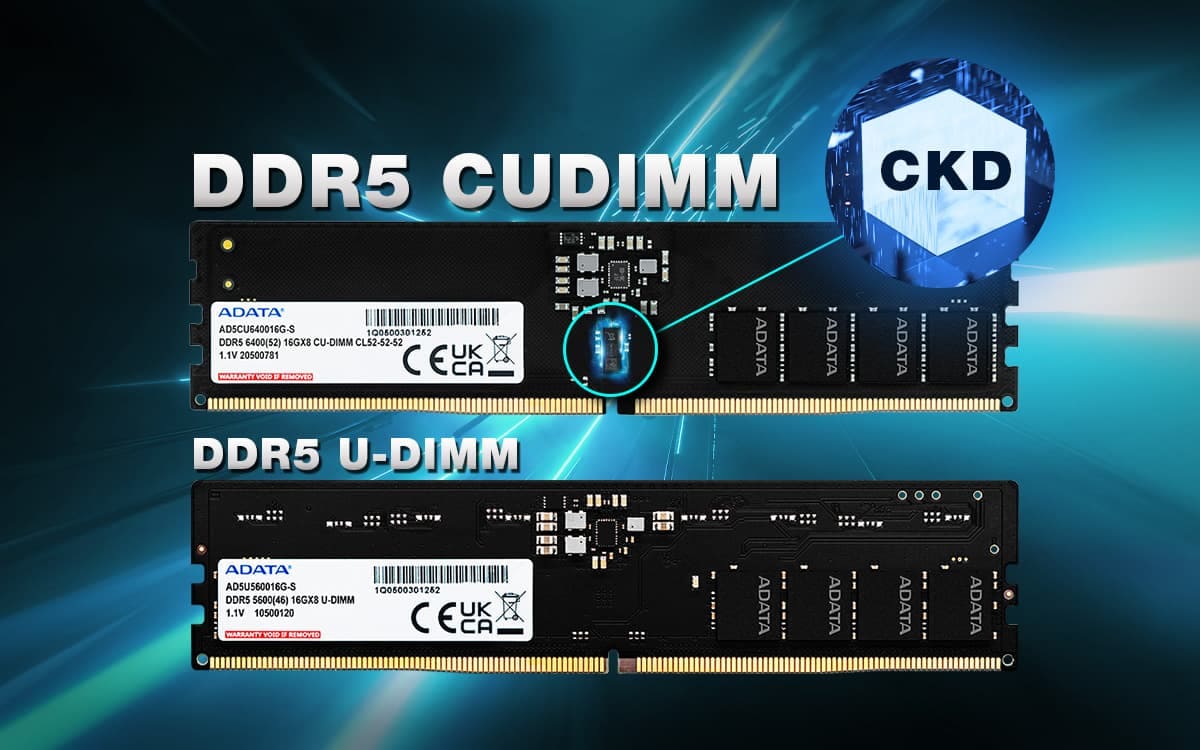
Cover Image Source: ADATA - The Future Trend of DDR5 Memory: A Comprehensive Analysis of UDIMM, RDIMM, and CUDIMM 10,000MHz DDR5 CUDIMM is a next-generation memory technology that dramatically enhances integrated graphics and on-device AI performance through a memory bandwidth revolution. It offers an approximate 78% performance improvement over conventional DDR5-5600 and, when combined with a Mixture of Experts (MoE) architecture, can significantly boost CPU offloading efficiency. What is CUDIMM? CUDIMM (Clocked Unbuffered Dual In-line Memory Module) is a next-generation memory technology that integrates a CKD (Clock Driver) chip into a DDR5 memory module. In conventional UDIMM (Unbuffered DIMM), the CPU’s memory controller directly sends clock signals to the memory chips. However, beyond 8,000MT/s, stability degrades due to clock jitter and signal attenuation issues. ...